
The Mistake: Treating the Whole System Like One Appliance
Here's what almost everyone does first: they look at the garage door and the opener as a single unit with a single lifespan, the way you'd think about a refrigerator. The door is old, so obviously the opener is on its way out too. Or the opener just died, so clearly the whole setup is worn out and it's time to replace everything at once.
It's a tempting shortcut because it's simple, and because it gives you a clean number to end the argument with — "it's 18 years old, that settles it." But a garage door isn't one part aging on one clock. It's a stack of separate components, each with its own wear pattern, and in a desert climate those patterns diverge even more than they would somewhere mild. Knowing which part you're actually arguing about changes the answer completely.
Different Parts, Different Clocks
Break it down and the "how long does it last" question actually has several answers:
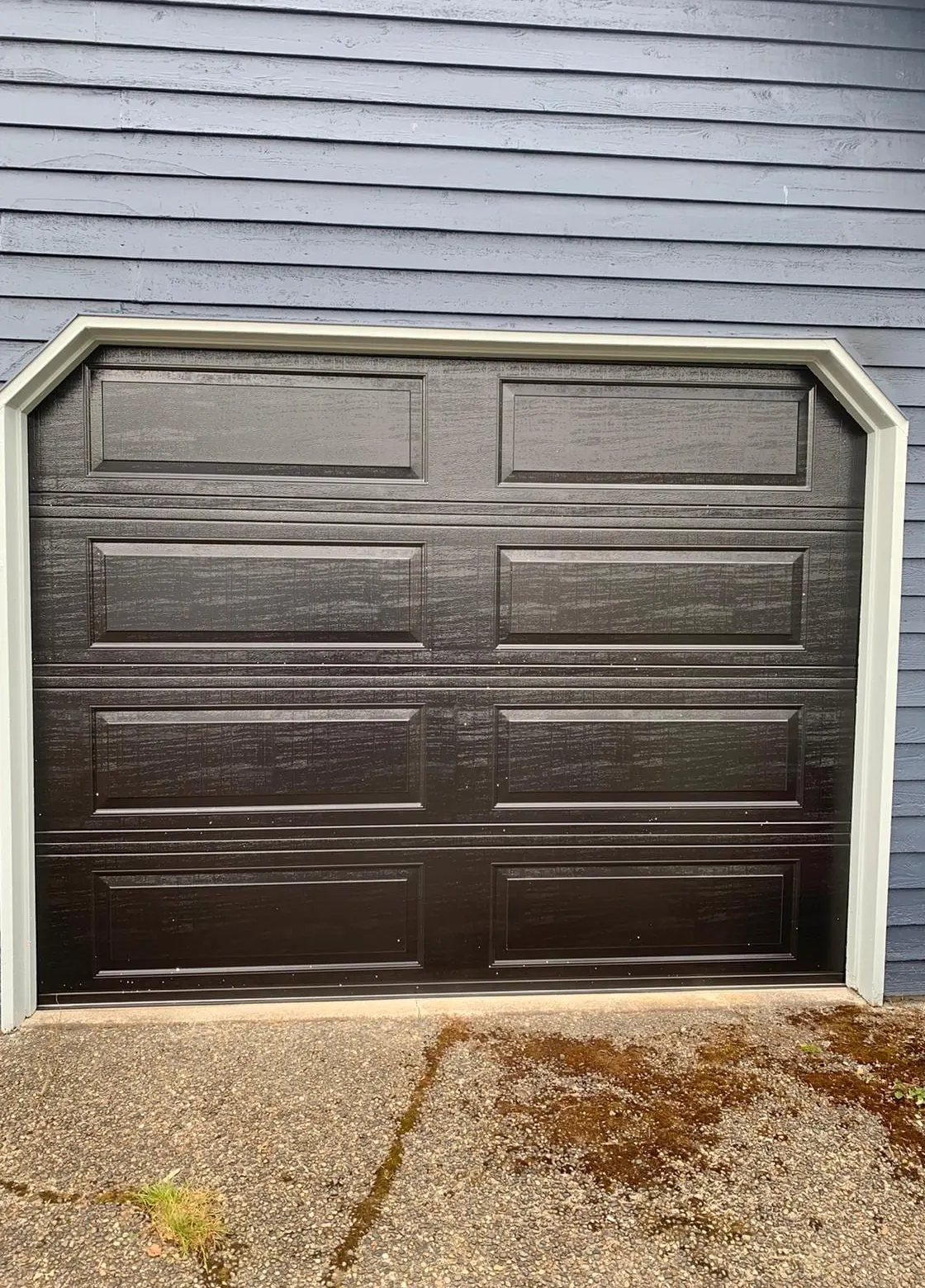
- The door panels themselves (steel or wood construction): Often 20-30 years if the material hasn't been compromised by UV exposure, dents, or water intrusion. Steel doesn't wear out from use the way moving parts do — it fails from fading, rust at the bottom edge, or impact damage.
- The opener motor and logic board: Typically 10-15 years. These are electronics and a gear-driven motor, and heat is their enemy far more than age alone.
- Torsion or extension springs: Rated in cycles, not years — usually 10,000 to 15,000 open-close cycles. A household using the door 3-4 times a day burns through that in roughly 7-10 years regardless of the calendar.
- Rollers, hinges, cables, and the bottom seal: The fastest-wearing parts, often needing attention every 3-7 years depending on maintenance.
So when someone says "the garage door is 15 years old and still working fine," they might be right about the panels and completely wrong about springs that are three years overdue to snap.
What Shortens the Timeline Here
Extreme dry heat and UV exposure hit every one of these components harder and faster than they would in a milder climate:
- Heat-cooked lubricant: Factory grease on hinges and rollers breaks down faster in sustained high temperatures, leaving metal grinding on metal and shaving years off hardware life.
- Opener components running hot: A garage that regularly hits well over 100 degrees stresses the motor's capacitors and circuit board every single summer, which is a big reason openers in this region often check out earlier than their 15-year ceiling.
- UV fading and surface degradation: South- and west-facing doors take the brunt of it, and faded, chalky paint is often a sign the sealant protecting the steel or wood underneath is also breaking down.
- Monsoon dust and sudden rain: Grit works into tracks and rollers, then gets glued there by the occasional downpour, accelerating wear on exactly the parts that already fail first.
- Cool desert nights: The daily temperature swing causes metal to expand and contract, which gradually loosens fasteners and hardware connections over the years.
What Actually Extends It
None of this means you're stuck replacing things early. The homeowners who get the long end of every range tend to do the same few things:
- Re-lubricate hinges, rollers, and the torsion shaft on a schedule suited to heat, not the once-a-year advice written for cooler climates.
- Keep the bottom seal intact so dust, grit, and water stay out of the track and hardware.
- Have springs checked by cycle count and visible wear rather than waiting for a snap.
- Keep the opener's logic board and motor housing clear of dust buildup, which traps heat.
- Address small issues — a slow close, a grinding roller, a faded panel edge — before they turn into a full component failure.
When to Call Phoenix Overhead Door Co
If you genuinely don't know which part of your system is actually at the end of its life — the door, the opener, the springs, or just the hardware — that's exactly what a tune-up visit settles. Our Garage Door Maintenance & Tune-Up service checks cycle wear on springs, inspects rollers and hinges for heat damage, and tests the opener under load so you get a straight answer instead of a guess. If the spring is the real issue, our Spring Replacement service handles that directly without pushing you toward a full system replacement you don't need yet.
If you're in Phoenix, Scottsdale, Tempe, Mesa, Glendale, Chandler, Paradise Valley, or Peoria and want a straight answer on what's actually wearing out, give Phoenix Overhead Door Co a call. We'll tell you what needs attention now, what can wait, and settle the argument with facts instead of guesswork.