
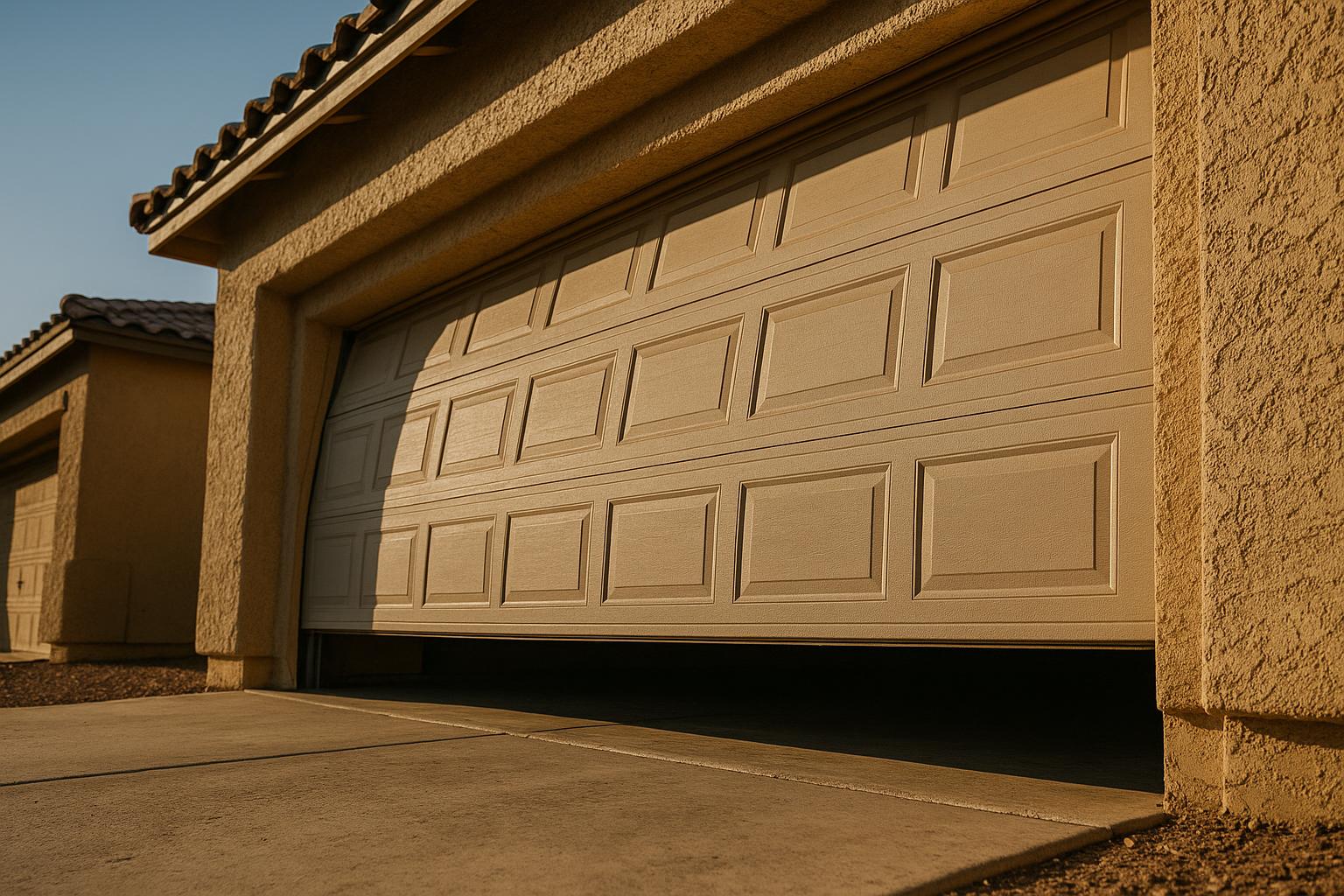
That Frustrating Moment When Your Garage Door Won't Stay Closed
You press the button on your remote, the garage door starts its descent, and then — just before it reaches the floor — it stops and reverses back up. You try again. Same thing. Maybe it works on the third try, maybe it doesn't. Either way, you're standing in your driveway wondering what's going on.
This is one of the most common garage door complaints we hear from homeowners across Phoenix. The good news is that a reversing garage door doesn't always mean something catastrophic has happened. The bad news is that ignoring it can lead to bigger, more expensive problems down the road.
Let's walk through the most likely reasons your garage door reverses before hitting the floor and what you can do about each one.
1. Misaligned or Dirty Safety Sensors
This is the number one cause of a garage door that reverses unexpectedly. Every garage door opener manufactured after 1993 is required to have photo-eye safety sensors mounted near the bottom of the door tracks, about six inches off the ground. These sensors send an invisible beam across the opening. If anything breaks that beam — a bike, a trash can, a child, or even a cobweb — the door is designed to reverse immediately.
Here in Phoenix, dust and debris accumulate on sensor lenses quickly, especially during monsoon season or when landscaping crews are working nearby. Even a thin film of dust can cause the sensors to misread and trigger a reversal.
What You Can Do
- Wipe both sensor lenses gently with a soft, dry cloth.
- Check that both sensors have a steady green or amber light (depending on the brand). A blinking light usually means misalignment.
- Make sure nothing is blocking the path between the two sensors.
- Verify the sensors haven't been bumped or shifted — they need to point directly at each other.
If cleaning and realigning doesn't solve the problem, the sensor wiring may be damaged or the sensors themselves may need replacement.
2. Incorrect Close-Limit Settings
Your garage door opener has close-limit settings that tell the motor exactly how far the door should travel before it's considered fully closed. If these settings are off — even slightly — the opener may interpret the door hitting the ground as an obstruction and reverse it as a safety precaution.
This issue commonly pops up after a new opener installation, after a power outage resets the unit, or simply because the settings have drifted over time. It can also happen when homeowners in the Phoenix area replace their garage door without recalibrating the opener to match the new door's dimensions.
What You Can Do
Adjusting close-limit settings varies by opener brand and model. Most units have adjustment screws or a digital menu that lets you fine-tune the travel distance. Consult your owner's manual for specific instructions. If you're not comfortable making the adjustment yourself, a professional tune-up from a local garage door technician can get everything dialed in quickly.
3. Worn or Broken Garage Door Springs
Your garage door springs do the heavy lifting — literally. They counterbalance the weight of the door so the opener doesn't have to work as hard. When springs wear out, lose tension, or break, the door becomes significantly heavier for the opener to manage.
When the opener struggles against that extra weight on the way down, its internal safety mechanism may interpret the resistance as an obstruction and reverse the door. You might also notice the door closing unevenly, moving slower than usual, or making loud grinding noises.
Spring replacement is one of the most common repairs we perform for homeowners throughout Phoenix, Scottsdale, Tempe, and the surrounding areas. The extreme heat in the Valley accelerates spring fatigue — most torsion springs are rated for about 10,000 cycles, but high temperatures can shorten that lifespan considerably.
What You Can Do
Do not attempt to replace garage door springs yourself. These components are under extreme tension and can cause serious injury if handled improperly. This is always a job for a trained technician with the right tools and experience.
4. Damaged or Obstructed Tracks
The metal tracks on either side of your garage door guide it up and down smoothly. If a track is bent, dented, or has debris lodged inside it, the door can bind or stick as it travels. When the opener encounters that resistance, it may reverse the door.
Inspect your tracks visually. Look for any obvious bends, gaps between the track and the wall, or foreign objects stuck in the track. In Phoenix, we occasionally see small rocks, leaves from desert landscaping, or even lizards causing track obstructions.
What You Can Do
- Remove any visible debris from the tracks.
- If you notice a minor bend, you may be able to gently tap it back into shape with a rubber mallet — but be careful not to make it worse.
- For significant track damage, call a professional. Forcing a door through a badly bent track can damage the door panels, rollers, and opener.
5. Worn Rollers or Hinges
Over time, the rollers that guide your door along the tracks can wear out, crack, or seize up. Similarly, hinges can become stiff or corroded. When these components don't move freely, they create friction and resistance that can trigger the opener's auto-reverse feature.
Nylon rollers tend to last longer and run more quietly than steel rollers, and they're a popular upgrade for homeowners in Mesa, Chandler, and Glendale who want a smoother, quieter door operation.
What You Can Do
Visually inspect your rollers for cracks, chips, or flat spots. If they look worn, it's time for a replacement. Rollers connected to the bottom bracket and the brackets under spring tension should only be replaced by a professional.
6. Opener Motor Issues
If none of the above issues seem to apply, the problem may be with the opener itself. The motor's internal logic board can malfunction, the drive gear can strip, or electrical components can fail — especially in the intense Phoenix summer heat when garage temperatures regularly exceed 130°F.
An aging opener that's struggling to operate your door is not just an inconvenience — it's a security risk. A door that won't close leaves your home, vehicles, and belongings exposed.
When to Call a Professional
Some of these issues — dirty sensors, minor debris in the tracks — are easy DIY fixes. But many of the underlying causes of a reversing garage door involve components under high tension or electrical systems that require professional expertise.
If you've tried the basic troubleshooting steps and your door is still reversing, it's time to call in a local garage door technician. At Phoenix Overhead Door Co, we diagnose and repair reversing garage doors every week. We'll identify the root cause, explain your options clearly, and get your door working reliably again — usually in a single visit.
Don't Wait Until the Door Won't Close at All
A garage door that reverses intermittently is telling you something is wrong. The longer you ignore it, the more likely it is that a minor issue turns into a major repair. Whether it's a sensor alignment, a spring replacement, or an opener that's reached the end of its life, addressing the problem early saves you money and keeps your home secure.
If you're dealing with a reversing garage door anywhere in the Phoenix metro area, give us a call or schedule a service appointment online. We'll show up on time, figure out what's going on, and make it right.