
Your Garage Door Springs Are Doing More Work Than You Think
Most homeowners in Phoenix don't think about their garage door springs until something goes wrong. But those tightly wound coils above your door are arguably the hardest-working component of your entire garage door system. They bear the full weight of the door — often 150 to 250 pounds or more — every single time it opens and closes.
The average household opens and closes the garage door about 1,500 times per year. Over time, that repetitive stress causes the metal to fatigue, and eventually, the springs will fail. The question isn't if your springs will wear out — it's when. Knowing the warning signs can help you schedule a replacement before you're stuck with a door that won't budge.
The Two Types of Garage Door Springs
Before we get into the warning signs, it helps to understand the two types of springs used in residential garage doors:
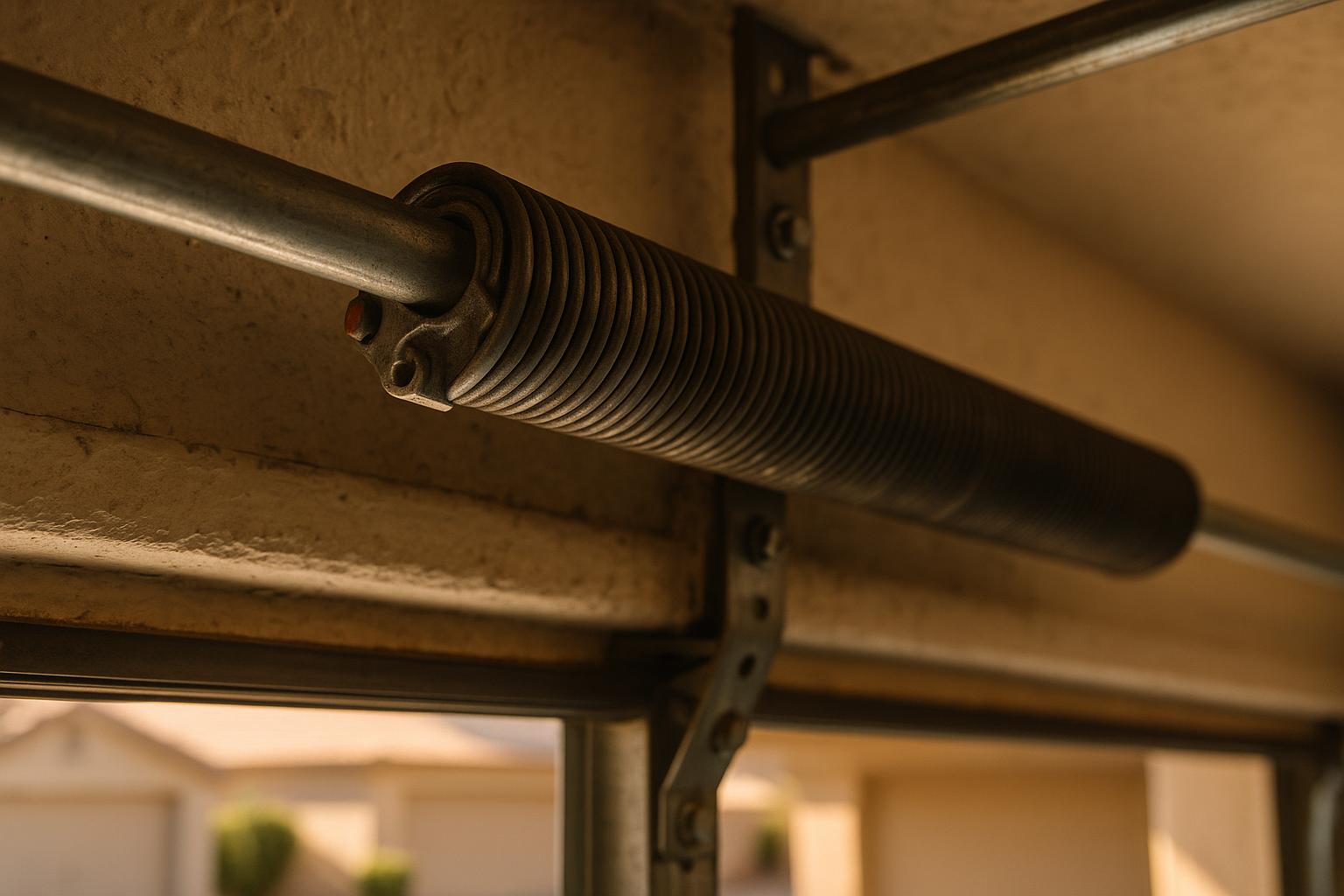
- Torsion springs — These are mounted on a metal shaft directly above the garage door opening. They twist to store energy and are the most common type found in Phoenix homes.
- Extension springs — These run along the horizontal tracks on either side of the door. They stretch and contract to lift and lower the door.
Both types have a limited lifespan, typically rated for around 10,000 cycles. A cycle is one full open-and-close. Depending on how often you use your garage, that could mean your springs last anywhere from five to ten years.
7 Warning Signs Your Garage Door Springs Are Failing
1. The Door Feels Heavier Than Usual
Try this simple test: pull the emergency release handle to disconnect the door from the opener, then manually lift the door about halfway. A properly balanced door with healthy springs should stay in place on its own. If it feels unusually heavy or slides back down, your springs are losing tension and struggling to support the door's weight.
2. The Door Opens Unevenly or Crooked
If one spring is weaker than the other — or if one has already broken — the door may rise unevenly, with one side higher than the other. This puts extra strain on the opener, the tracks, and the remaining spring, and it can lead to a complete failure quickly.
3. You Hear a Loud Bang From the Garage
A broken torsion spring releases its stored energy all at once, producing a loud bang that many homeowners describe as sounding like a gunshot or a car backfiring. If you heard a sudden loud noise from your garage and now the door won't open, a snapped spring is the most likely culprit.
4. There's a Visible Gap in the Spring
Take a look at the torsion spring above your door. An intact spring is a continuous, tightly wound coil. If you see a gap — a section where the coils have separated — the spring has snapped and needs immediate replacement.
5. The Opener Struggles or Stops Mid-Cycle
Your garage door opener is designed to lift a balanced door, not deadlift hundreds of pounds on its own. When springs weaken, the opener has to work much harder. You may notice it straining, moving the door more slowly, or stopping partway through the cycle. Continuing to use the opener in this condition can burn out the motor.
6. The Door Slams Shut Quickly
Healthy springs control the speed of the door as it closes. If your door drops faster than normal or slams to the ground, the springs aren't providing enough counterbalance. This is a safety concern, especially for families with children or pets.
7. You Can See Rust or Corrosion on the Springs
While Phoenix's dry climate means less rust than you'd see in humid regions, it's not impossible — especially if your garage isn't climate-controlled or if moisture gets in during monsoon season. Rust weakens the metal and accelerates wear, shortening the spring's lifespan.
Why You Shouldn't Replace Garage Door Springs Yourself
We understand the DIY temptation. There are plenty of videos online showing how to swap out garage door springs. But this is one job we strongly recommend leaving to a professional, and here's why:
- Extreme tension: Torsion springs are under tremendous force. A spring that slips during installation can cause serious injury or even death.
- Specialized tools required: Proper replacement requires winding bars, clamps, and precise calibration that most homeowners don't have.
- Matching matters: Springs need to be matched to the exact weight and size of your door. The wrong spring can cause the door to malfunction or damage the opener.
A trained technician can replace your springs safely in about an hour, and the cost is far less than an emergency room visit.
How Phoenix Weather Plays a Role
If you've lived in the Phoenix area for any length of time, you know our summers push everything to the limit — including your garage door hardware. Metal expands in extreme heat, and the temperature inside an un-insulated garage can easily exceed 140°F during July and August. That thermal stress accelerates metal fatigue in springs, meaning they may wear out faster here than in milder climates.
On the flip side, our cooler winter mornings — when temperatures occasionally dip into the 30s and 40s — cause the metal to contract. That constant expansion and contraction cycle adds stress that shortens spring life. If your springs are more than seven years old and you're in Phoenix, Scottsdale, Tempe, Mesa, Glendale, or Chandler, it's worth having them inspected.
Should You Replace One Spring or Both?
If your garage door has two torsion springs and one breaks, we almost always recommend replacing both at the same time. Here's the reasoning:
- Both springs were installed at the same time and have the same number of cycles on them.
- If one has failed, the other is likely close behind.
- Replacing both at once saves you from paying for a second service call in a few weeks or months.
Think of it like replacing tires — you wouldn't put one new tire on and leave the other three bald.
What to Do If You Suspect a Spring Problem
If you've noticed any of the warning signs above, here's what we recommend:
- Stop using the door. Continuing to operate a door with a broken or weakened spring can damage the opener and create a safety hazard.
- Do not attempt to open the door manually if a spring is broken — the full weight of the door will be unsupported.
- Call a professional. A qualified garage door technician can assess the situation, recommend the right springs, and have your door back in working order quickly.
At Phoenix Overhead Door Co, we handle spring replacements across the Phoenix metro area every day. We carry a wide range of spring sizes on our trucks so most repairs can be completed in a single visit. Our team will also inspect the rest of your door system — cables, rollers, tracks, and opener — to make sure everything is in good shape.
Don't Wait for the Snap
A broken garage door spring is one of the most common — and most preventable — garage door emergencies we see. By knowing the warning signs and scheduling a replacement before a catastrophic failure, you'll avoid the inconvenience of being locked out of your garage, the risk of damage to your car or belongings, and the safety hazard of an uncontrolled door.
If your springs are getting old or showing signs of wear, give us a call. We'll get your garage door balanced, safe, and running smoothly — the way it should be.