
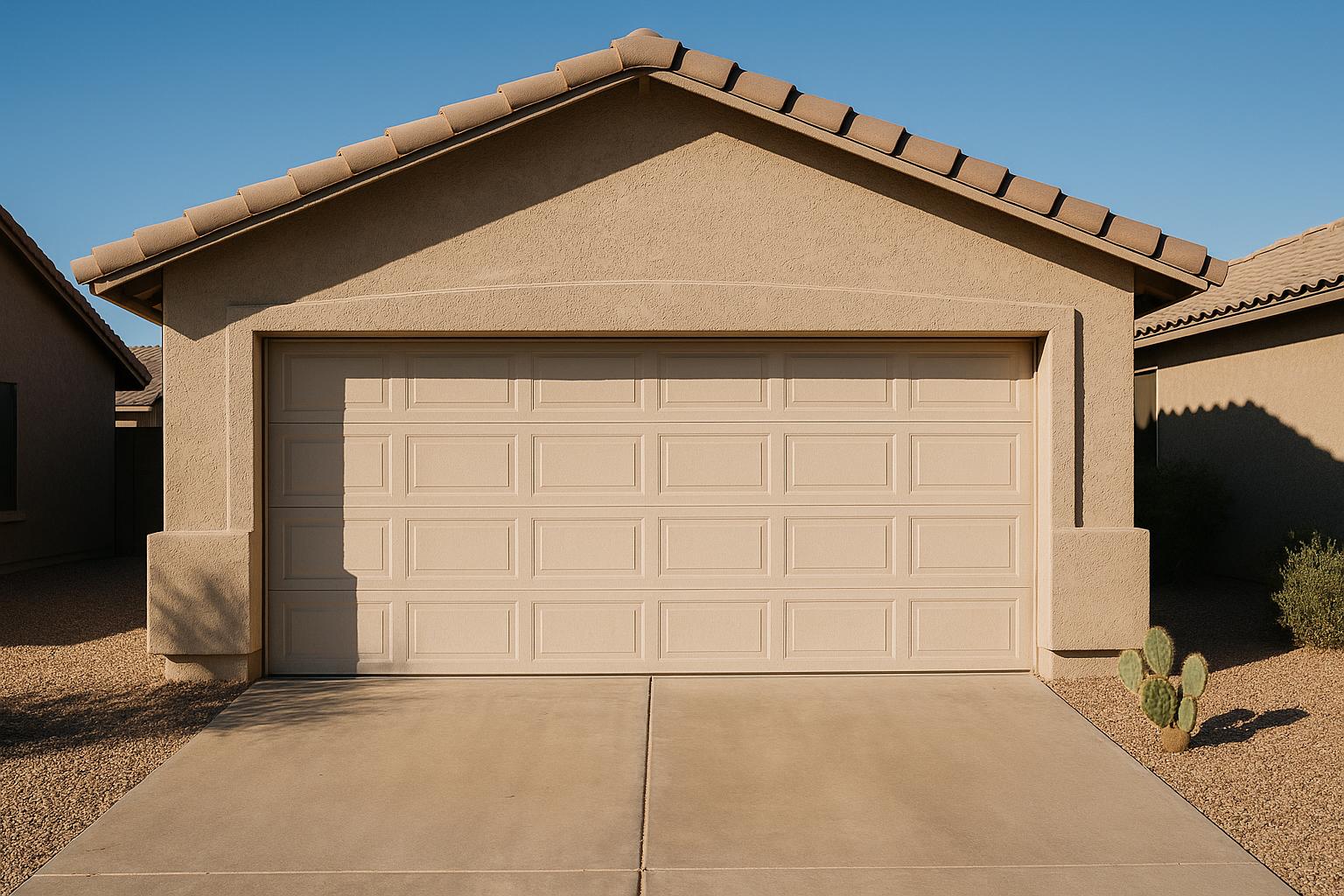
Your Garage Door vs. the Phoenix Sun
Living in Phoenix means dealing with triple-digit temperatures for months on end. While most of us think about keeping our homes cool and our AC units running, there's one part of the house that takes a serious beating from the heat that often gets overlooked — your garage door.
Your garage door is the largest moving component of your home. It faces direct sun exposure for hours every day, and the interior of your garage can easily reach 140°F or more during a Phoenix summer. That kind of relentless heat takes a toll on every part of the system, from the springs and tracks to the opener and weatherstripping.
At Phoenix Overhead Door Co, we see a noticeable spike in repair calls every summer. Many of these issues are directly caused by heat damage — and most of them are preventable. Here's what the extreme Arizona climate does to your garage door and what you can do to stay ahead of costly repairs.
How Extreme Heat Damages Garage Door Components
Metal Expansion in Tracks and Springs
Metal expands when it gets hot. That's basic physics, and it plays out in real ways on your garage door. The steel tracks that guide your door can expand enough to cause misalignment, leading to the door binding, sticking, or making grinding noises as it moves. In some cases, a slightly warped track can cause the door to come off its rollers entirely.
Garage door springs are also affected. Torsion and extension springs are under constant tension, and heat accelerates metal fatigue. Springs that might have lasted another year or two in a milder climate can snap prematurely during a Phoenix summer. A broken spring isn't just inconvenient — it can be dangerous if you're standing nearby when it fails.
Garage Door Opener Overheating
Your garage door opener is essentially an electric motor, and motors don't love extreme heat. When your garage interior climbs well above 100°F, the opener has to work harder to lift the door, and it's doing so in an environment that makes it difficult to cool down. This can lead to the motor overheating and shutting off mid-cycle, shortened lifespan of internal components, and circuit board failures that require full opener replacement.
If your opener has started hesitating, running slower than usual, or stopping partway through a cycle during the summer months, heat stress is a likely culprit.
Weatherstripping and Seal Deterioration
The rubber weatherstripping along the bottom and sides of your garage door is designed to keep out dust, pests, and outside air. But prolonged UV exposure and extreme temperatures cause rubber and vinyl seals to crack, shrink, and become brittle far faster than they would in cooler climates.
Once your seals fail, hot air pours into the garage, your energy bills go up, and you may notice more dust, insects, and even small critters finding their way inside. Replacing worn weatherstripping is one of the most affordable and impactful maintenance tasks you can do.
Panel Warping and Paint Damage
If your garage door is made of steel or wood, direct sun exposure can cause panels to warp over time. Steel doors on south- or west-facing garages absorb enormous amounts of heat, and that thermal stress can cause subtle bowing that affects how the door sits in the frame. Wood doors are even more vulnerable — they can crack, split, and lose their finish quickly in the desert climate.
Paint and finish coatings also break down faster under intense UV radiation. Peeling, fading, and chalking are common on garage doors that don't receive periodic maintenance.
What You Can Do to Protect Your Garage Door
Schedule a Summer Tune-Up
The single best thing you can do is have your garage door professionally inspected and tuned up before the hottest months hit. A maintenance visit from our team at Phoenix Overhead Door Co includes lubricating all moving parts with heat-resistant lubricant, checking spring tension and overall balance, inspecting tracks for alignment and wear, testing the opener's performance and safety features, and examining weatherstripping and seals for damage.
Catching small issues before they become big problems saves you money and prevents the inconvenience of a garage door that stops working on the hottest day of the year.
Insulate Your Garage Door
If your garage door isn't insulated, the interior of your garage becomes an oven. Insulated garage doors — or aftermarket insulation kits — help regulate the temperature inside the garage, which protects your opener, reduces strain on your home's HVAC system, and keeps the space more usable.
This is especially important for homeowners in Phoenix who use their garage as a workshop, gym, or extra living space. An insulated door can reduce garage temperatures by 10 to 20 degrees or more.
Choose a Light-Colored Door
If you're in the market for a new garage door, consider choosing a lighter color. Dark-colored doors absorb significantly more heat than lighter ones. A white, beige, or light gray door will stay cooler to the touch and experience less thermal stress over time. It's a simple choice that pays off over the life of the door.
Keep the Tracks Clean and Lubricated
Dust is a fact of life in the Phoenix metro area, and it builds up quickly inside garage door tracks. Combined with heat, dust and debris create friction that makes the door harder to open and close, putting extra strain on the opener and springs. Wiping down the tracks periodically and applying a silicone-based lubricant keeps everything running smoothly.
Don't Ignore Warning Signs
If your garage door starts making unusual noises, moves unevenly, feels heavier than normal, or your opener seems to struggle, don't wait to address it. These are signs that heat may already be causing damage, and early intervention is almost always less expensive than a full repair or replacement.
When to Call a Professional
Some garage door maintenance tasks are safe for homeowners to handle — cleaning tracks, replacing weatherstripping, and keeping the area around the door clear. But anything involving springs, cables, track realignment, or opener repair should be left to trained technicians. These components are under high tension and can cause serious injury if handled incorrectly.
If you're in Phoenix, Scottsdale, Tempe, Mesa, Glendale, or Chandler and your garage door is showing signs of heat damage, our team at Phoenix Overhead Door Co is ready to help. We provide fast, honest service and we understand the unique challenges that come with maintaining a garage door in the desert.
Don't Let the Heat Win
Your garage door works hard every day, and the Phoenix climate makes its job even tougher. With a little proactive maintenance and the right professional support, you can keep your door running reliably through even the most brutal Arizona summers. Give us a call or schedule a maintenance visit today — your garage door will thank you.