
The Mistake Most People Make First
The first cold snap of the season hits, and your garage door feels stuck at the bottom edge. It's tempting to assume the worst case you've heard about from friends who moved from colder states: the door is frozen to the slab. So people grab a hairdryer, pour warm water along the bottom seal, or just keep mashing the remote button hoping the opener forces it loose. None of that is necessary here, and the last one can actually burn out a motor or strip a gear.
Phoenix doesn't get ice on the garage floor. What you're feeling is real, but the cause is different, and it traces straight back to what our summers do to a garage door the other nine months of the year.
Symptoms You'll Notice First
- The door feels heavier or slower than normal, especially on the first open of the day
- A dragging or grinding sound near the bottom corners as the door lifts
- The opener strains, clicks, or seems to hesitate before the door actually moves
- Everything runs smoothly again by afternoon once the garage warms up
That last symptom is the biggest clue. If the door behaves differently depending on the hour, temperature is almost certainly involved, not a mechanical failure that would act up all day.
What's Actually Happening: Causes in the Order a Technician Checks
1. The Weatherstripping Is Stuck to the Slab
Rubber weatherstripping along the bottom of the door gets stiff in cool overnight temperatures, and after a summer of monsoon dust working into the grooves, it can tack itself lightly to the concrete. It's not ice, but it creates similar resistance. A technician checks this first because it's the most common and the easiest to fix: clean the seal and the slab underneath it, and replace the strip if it's cracked or hardened from UV exposure.
2. Track Lubricant Has Gone Gummy
Phoenix summers cook standard lubricants into a thick, tacky residue on the rollers and tracks. That residue barely moves in warm weather, but cool mornings make it stiffer still, which is why the drag is worse before the sun hits the garage. The fix is to clean the old buildup off the tracks and rollers completely, then apply a lithium-based grease rated for wide temperature swings, not a household spray lubricant that breaks down fast in heat.
3. Cold Contraction Exposes Track Misalignment
Metal contracts slightly as it cools. If your tracks were already a little out of alignment, the extra half-inch of expansion from summer heat may have been masking the problem. Cooler nights pull things tight again and the rollers catch on a joint or bracket that was fine in July. Realigning the tracks is a straightforward adjustment, but it's one that needs a level and some torque wrench work, not guesswork with a rubber mallet.
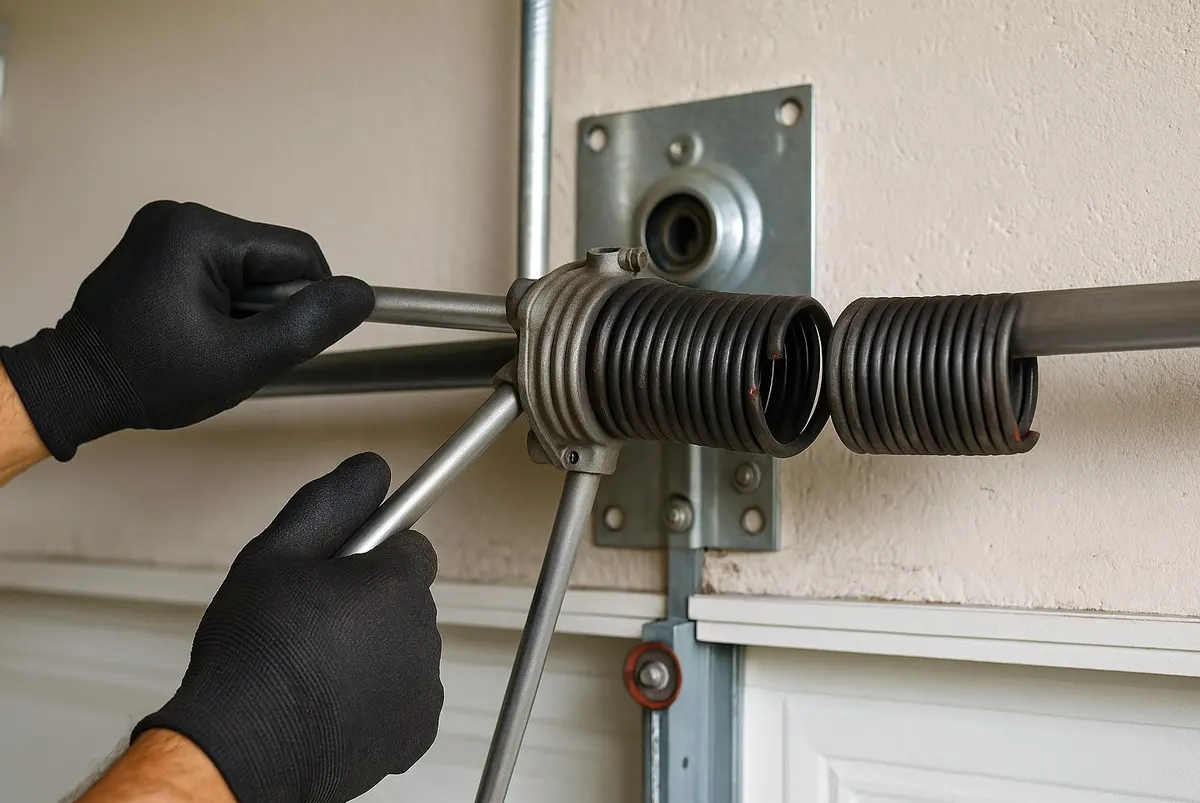
4. Spring Tension Shifts With Temperature
Torsion springs can feel marginally different in tension as metal contracts in the cold, especially if the springs are already older or were sized for a door that's been leaned on all summer. If the opener is straining rather than the door just dragging at the bottom, this is often why. A technician checks spring tension and wear here, after ruling out the seal and tracks, since a worn spring is a safety issue, not just a comfort one.
5. Opener and Sensor Behavior
Cold doesn't do much to the opener's circuit board, but battery backup units can underperform on cold mornings, and safety sensor alignment can shift slightly if the door has been dragging unevenly. If the door reverses unexpectedly or stalls partway, this is the last thing checked, after the mechanical causes are cleared.
When to Call Phoenix Overhead Door Co
If cleaning the weatherstripping and re-lubricating the tracks doesn't fix the drag, or if you notice the spring looks stretched, gapped, or different from how it sat a few months ago, it's time to call. Our Garage Door Maintenance & Tune-Up service covers exactly this kind of seasonal check: track alignment, lubrication with heat-rated grease, and weatherstripping inspection before the real cool season sets in. If tension is the issue, our Spring Replacement service handles it safely, since torsion springs are under enough force to cause serious injury if handled without the right tools.
If your garage door in Phoenix, Scottsdale, Tempe, Mesa, Glendale, Chandler, Paradise Valley, or Peoria is sluggish on these cooler mornings, give Phoenix Overhead Door Co a call. We'll get it moving smoothly again before winter settles in.