
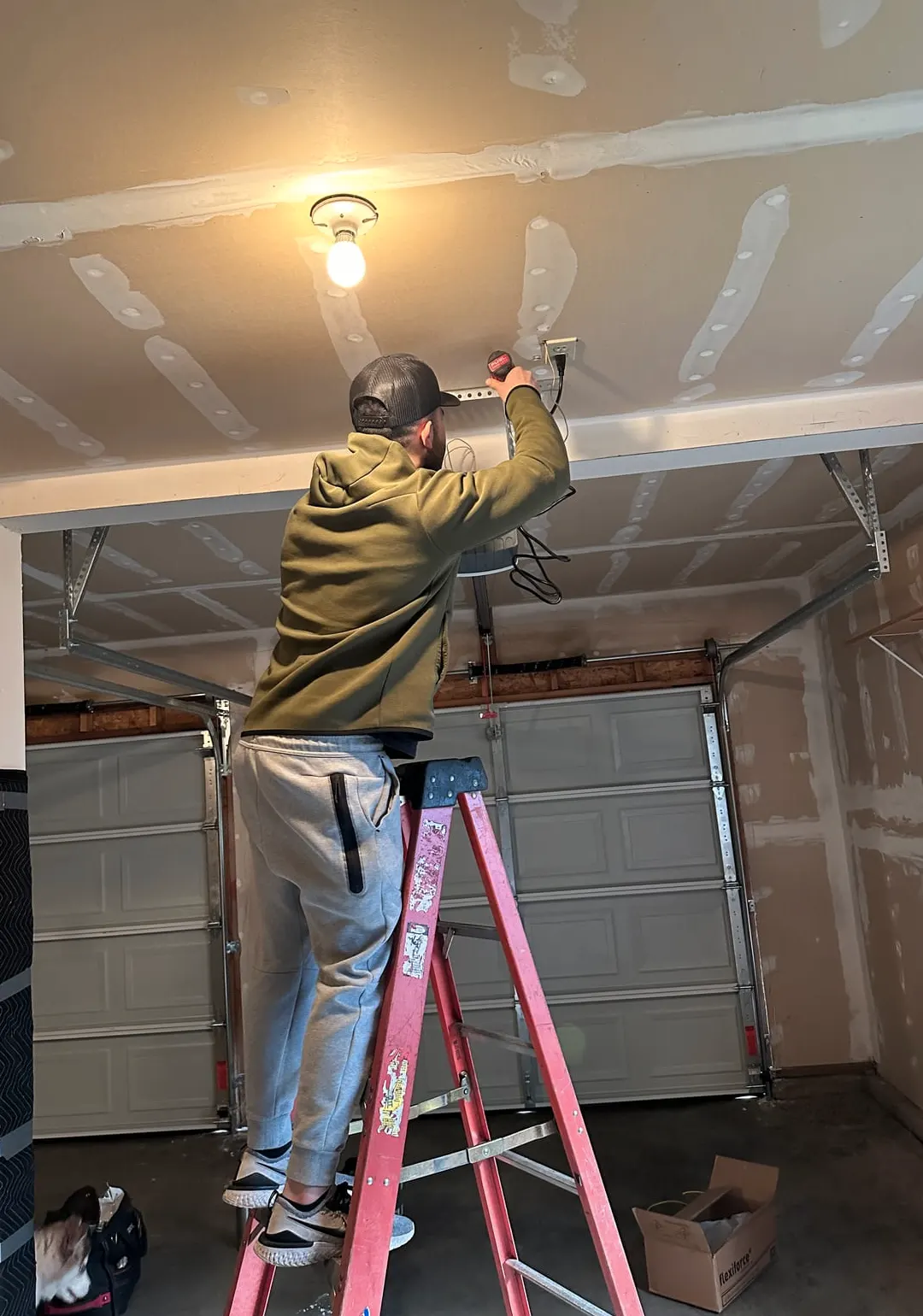
What a Technician Sees on This Call
The homeowner says the door won't close, or it starts down and pops right back up with no obvious reason. Out at the truck, before even touching the opener, the tech is already looking at the floor near each side of the track. More often than not, there's a spiderweb strung across one of the small plastic sensor eyes, or a layer of fine dust sitting on the lens like powder. Sometimes a bracket is bent a few degrees off square from a trash can clipping it on the way out of the garage. These two little sensors, mounted six inches or so off the ground on either side of the door, cause more "my garage door won't close" calls than almost anything else in the system.
Why Photo Eyes Trip in This Climate
Photo eyes work in pairs: one sends an infrared beam, the other receives it. Break that beam while the door is closing and the opener reverses immediately, no questions asked. That's the whole point, it's the thing keeping the door from coming down on a kid, a pet, or a bumper. But the same conditions that make a Phoenix-area garage a tough place for springs and openers also make life hard on these sensors.
- Monsoon dust settles on the lenses in a fine film during storm season, and even outside of monsoon season, dry wind kicks grit through the open door and onto the sensor housings.
- Direct sun at certain angles, especially low afternoon light this time of year, can wash out the receiving eye enough to cause false trips, even with nothing blocking the beam.
- UV exposure over several summers yellows and micro-cracks the plastic lens covers, cutting down how much infrared light actually gets through.
- Temperature swings between hot days and the cooler desert nights we're into now can cause brief condensation on the lens, enough to scatter the beam for a cycle or two.
- Vibration from the door and track over time, or a direct bump from a bike, ladder, or vehicle, nudges the brackets out of alignment so the beam no longer lines up eye to eye.
How Bad This Gets
At best, it's an annoyance: the door won't close until you fix it. At worst, a misaligned or dirty sensor fails in the wrong direction, either refusing to close the door at all (safe but frustrating) or, in rare cases involving wiring faults rather than dirty lenses, failing to trigger a reversal when it should. That second scenario is the real danger, and it's why these sensors are not something to shrug off or disconnect out of convenience.
Cleaning and Aligning Them Yourself
- Disconnect the opener or unplug it before working near the tracks.
- Locate both sensors, low on each side of the door, usually held by a small bracket with a wingnut or thumbscrew.
- Wipe each lens with a soft, dry microfiber cloth. Skip glass cleaner, it can leave a film that scatters the beam. A barely damp cloth followed by a dry one works if the dust is caked on.
- Check that both indicator lights are solid, not blinking. A blinking light on either sensor means it's not receiving a clean beam.
- Inspect the brackets for bending. If one side looks tilted compared to the other, loosen the wingnut and adjust it back to level, using the track as a reference line.
- Power the opener back on, and with the wingnuts still slightly loose, nudge each sensor until both lights go solid, then tighten.
- Test the door several times, and once more with a broom handle or similar object waved through the beam path, to confirm it reverses every time.
- While you're down there, look at the wiring running along the track to each sensor. Cracked insulation, chew marks, or corrosion at the connectors are common after a few years of heat cycling, and any of those can cause intermittent trips that cleaning won't fix.
Why You Should Never Bypass Them
Some homeowners, out of frustration, tape the sensor wires together or unplug one entirely just to get the door to close. This defeats the entire safety reversal system. The door will close on anything in its path, full stop, with no sensor to catch it. It can also confuse the opener's logic board, which expects a signal from both sensors during every cycle. If the sensors are misbehaving, the fix is alignment, cleaning, or a wiring repair, never removal.
When to Call Phoenix Overhead Door Co
If you've cleaned and aligned the sensors and the door still reverses randomly, or the wiring looks damaged, it's time for a second set of eyes. Our Garage Door Maintenance & Tune-Up service includes a full check of the safety reversal system, sensor wiring, and bracket condition, and if a sensor or the opener's logic board itself needs replacing, our Garage Door Opener Repair & Installation team handles that directly, same visit in most cases.
If your garage door in Phoenix, Scottsdale, Tempe, Mesa, Glendale, Chandler, Paradise Valley, or Peoria isn't closing reliably, give us a call before the next dust storm makes it worse. We'll get it running safely and keep it that way.