
What a Technician Usually Finds
On a typical service call for a squealing or sluggish garage door, the problem is almost never a mystery once the panel comes off. Either the hardware is bone dry because the heat has baked out whatever lubricant was there months ago, or someone sprayed WD-40 on everything and it's turned into a black, gritty paste mixed with monsoon dust. Both situations cause the same symptoms: grinding noises, a door that hesitates partway through its cycle, and rollers that look more worn than they actually are. The fix is simple, but it only works if you use the right products in the right places.
Tools You'll Need
- Silicone-based garage door lubricant (spray can)
- White lithium grease (for chain or screw-drive openers)
- Clean, lint-free rags
- A soft brush or old toothbrush for caked-on grime
- A stepladder
- Safety glasses
Step-by-Step: How to Lubricate Your Garage Door
- Disconnect the opener. Pull the emergency release cord so the door is operating manually, or unplug the opener at the outlet. You don't want it cycling while you're working on it.
- Clean everything first. Wipe down the hinges, rollers, and track rail with a dry rag before adding any lubricant. In this climate, dust from monsoon storms settles into every moving part, and spraying lubricant over grit just grinds it into the metal instead of protecting it. Use the brush on any caked areas.
- Lubricate the hinges. Spray a light coat of silicone lubricant directly on each pivot point where the hinge meets the door section. Work the door up and down once by hand to let it settle in.
- Lubricate the rollers, but check the type first. If you have steel rollers with exposed bearings, a light spray works. If you have nylon rollers with sealed bearings, skip the lubricant on the roller wheel itself and just wipe it clean. Spraying sealed rollers does nothing but attract dust.
- Leave the tracks alone. This is the most common mistake homeowners make. Tracks should be cleaned, never lubricated. Oil on the track doesn't help the rollers glide; it just collects dirt and can make the rollers slip instead of roll smoothly.
- Lubricate the opener's chain or screw rail. A light coat of white lithium grease on a chain-drive rail, or the manufacturer-specified lubricant on a screw-drive rail, keeps the drive mechanism quiet. Check your opener's manual for the exact spec since this varies by brand.
- Hit the lock mechanism and handle. If your door has a manual lock, a small amount of silicone lubricant in the keyhole and on the latch keeps it from sticking, especially useful after a dusty week.
- Wipe off excess. Any lubricant left sitting on the surface will just become a dust magnet. A final wipe-down keeps things clean and extends the time before you need to do this again.
- Test the door. Reconnect the opener and run the door through a full open-close cycle. It should move smoothly and quietly. If you still hear grinding or squeaking in one spot, that part may need more attention than lubricant can provide.
Products to Use
- Silicone-based garage door lubricant – doesn't gum up, holds up reasonably well against dust, and won't break down as fast in high heat as thinner oils.
- White lithium grease – appropriate for chain-drive openers and some bearing points, but use sparingly since too much becomes a dust trap.
Products to Avoid
- WD-40 – it's a water displacer and light solvent, not a true lubricant. It evaporates quickly in dry heat and leaves a sticky residue that attracts dust and sand.
- Motor oil or all-purpose household oil – too thin, drips, and breaks down fast when temperatures climb.
- Grease-based automotive products – many aren't formulated for the heat swings between a hot garage interior and cool desert nights, and they can thicken or separate over time.
Where a Homeowner Should Stop
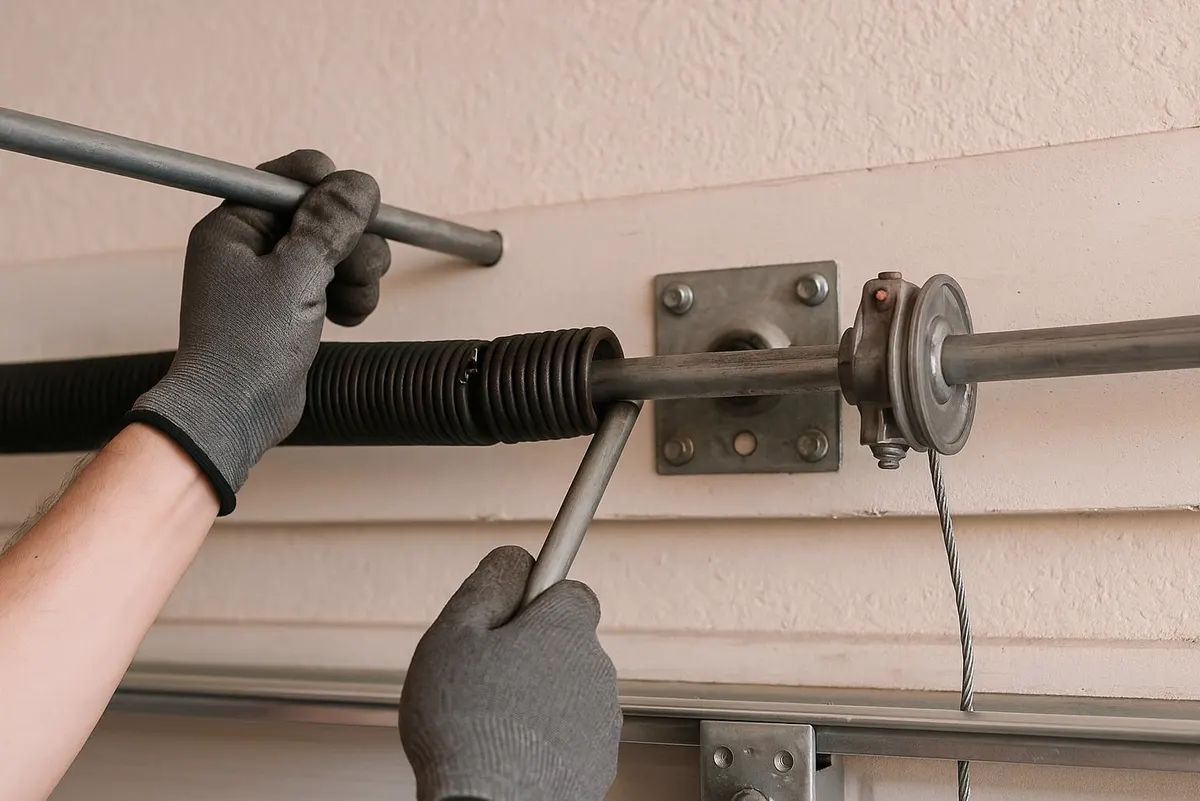
Lubricating hinges, rollers, and the opener rail is safe, routine homeowner maintenance. What's not: touching the torsion spring, the cables, or opening up the opener's gear housing. Springs are under heavy tension and are not a DIY lubrication job, even though some guides suggest a light coat of grease on the coils. If your spring looks worn, rusted, or has visible gaps between coils, that's a sign it needs replacing, not oiling. Likewise, if the opener's internal gears are grinding, that usually means a gear kit replacement, not a drop of lubricant.
When to Call Phoenix Overhead Door Co
If you've lubricated everything correctly and the door is still noisy, hesitates, or feels heavier than it used to, it's worth having a technician take a look. Our Garage Door Maintenance & Tune-Up service covers a full inspection of springs, cables, rollers, and hardware, along with professional-grade lubrication in all the right spots. If the issue turns out to be a worn spring or a failing opener component, our Spring Replacement and Garage Door Opener Repair & Installation services handle it safely.
If your garage door needs more than a can of lubricant, give Phoenix Overhead Door Co a call. We serve homeowners across Phoenix, AZ and the surrounding valley, and we're happy to come take a look.